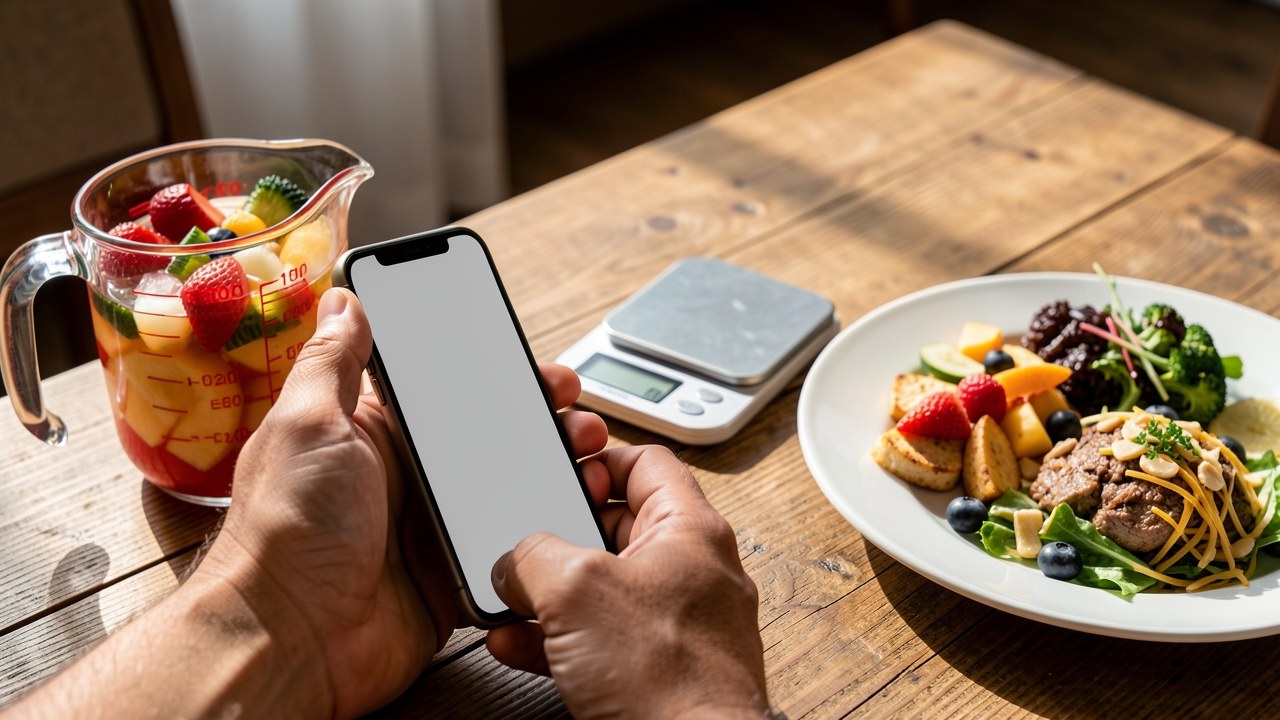
Why Accurate Tracking Matters
Weight loss occurs when you consume fewer calories than your body burns—a state known as a calorie deficit. While the principle is simple, achieving a consistent deficit requires knowing how much you’re actually eating. Many people underestimate their intake, and even small daily errors can add up.
Accurate tracking isn’t about perfection; it’s about accountability and learning. By seeing the real calorie content of your meals, you can make informed choices that support your goals without guesswork.
Sources: Stephanie Kay Nutrition
Choosing a Tracking Method That Fits Your Routine
The best tracking method is the one you’ll stick with. Options include smartphone apps, paper journals, or simple spreadsheets. Apps like MyFitnessPal offer extensive food databases and barcode scanning, making logging fast and convenient. If you prefer a low-tech approach, a notebook and a calorie-counting reference book can work just as well.
Consider your daily habits. If you eat out often, an app with restaurant listings will save time. If you cook most meals from scratch, you may prefer a method that lets you save custom recipes. The goal is to reduce friction, not add stress.
Spreadsheets offer flexibility for those who like to customize columns or calculate totals manually. You can build a simple log with columns for date, food, amount, and calories, then use formulas to sum your daily intake. As long as you stay consistent, any method works.
- Apps: Built-in barcode scanners, recipe builders, and history logs streamline tracking.
- Paper: A simple journal requires no data plan and can help you stay mindful.
- Spreadsheets: Customizable and free, if you're comfortable with basic formulas.
- Consistency: Choose a method you can maintain daily, even when life gets busy.
Sources: MyFitnessPal Blog
How to Weigh and Measure Foods Accurately
Using a kitchen scale is the most accurate way to measure portions. Volume measurements like cups and tablespoons can vary significantly depending on how tightly a food is packed or how it settles, which can change the calorie count. Weighing foods in grams gives you precise data to log.
When you’re first starting, weigh everything: meats, grains, fruits, vegetables, and even packaged snacks if you’re not eating the whole package. Over time, you’ll become better at eyeballing portions, but weighing at least periodically helps correct your estimates.
- Weigh raw ingredients when possible, as cooking can change water content and weight.
- Use the nutrition label on packaged foods for the serving size and weigh that amount.
- If you don’t have a scale, measure with standard cups and spoons, but be aware of potential inaccuracies.
Sources: Stephanie Kay Nutrition
Reading Food Labels and Estimating Portions
Food labels provide the calorie and nutrient information per serving, but they’re only useful if you apply them to your portion. Check the serving size—it may be smaller than you expect. Weigh your portion to see how it compares to the label’s serving size.
To calculate the total calories, multiply the calories per serving by the number of servings you actually eat or drink. For example, if a label says a serving has 200 calories and you eat two servings, that’s 400 calories. This applies to beverages, too—a bottle may contain two or more servings, so always check.
When you’re without a label or scale, learn to estimate using visual cues: a serving of meat is about the size of a deck of cards, a serving of rice or pasta is roughly a cupped handful, and a serving of cheese is about the size of your thumb. These estimates are less precise, but they help you log when you’re away from home.
- Always compare your portion to the serving size on the label.
- Multiply the per-serving calories by the number of servings you consume.
- Use measuring cups and spoons at home to train your eye for restaurant portions.
- Remember that condiments like ketchup, BBQ sauce, and salad dressing add calories—measure them, too.
Sources: Stephanie Kay Nutrition
Tracking Restaurant Meals
Dining out doesn’t have to derail your tracking. Many restaurants post nutrition information online; use it to make informed choices. If nutrition info isn’t available, overestimate the calorie content of your meal, as restaurant portions are often larger and higher in calories than home-cooked equivalents. Err on the side of overestimation to stay within your goal.
- Look up the restaurant’s nutrition menu before you go.
- Order items that are grilled, baked, or steamed rather than fried.
- Ask for dressings and sauces on the side so you can control portions.
- When in doubt, log a generous estimate—this helps prevent underreporting.
Sources: Stephanie Kay Nutrition
Common Tracking Mistakes and How to Avoid Them
Many people make simple mistakes that throw off their tracking. Not measuring portions, forgetting cooking oils, skipping condiments, ignoring liquid calories, and underestimating restaurant meals are among the most common. These small omissions can add up to hundreds of unlogged calories.
Another frequent error is eating back exercise calories. Activity trackers can be inaccurate, and if you rely on them you might consume more than you think you’ve earned. Instead, treat exercise as a bonus to your deficit, not a license to eat more.
Setting too-strict calorie goals can also backfire, leading to extreme hunger, fatigue, and muscle loss. Aim for a moderate deficit that supports steady progress without making you miserable.
- Weigh everything, including oils, butter, and condiments.
- Track all beverages with calories: juice, soda, milk, smoothies, flavored coffees, and alcohol.
- Log small bites and tastes—they count, too.
- Don’t rely on exercise trackers for calorie burn.
- Avoid excessively low calorie targets—stick to recommended minimums unless under professional guidance.
Sources: Stephanie Kay Nutrition, MyFitnessPal Blog
Handling Tracking Challenges and Getting Back on Track
Life happens. You may forget to log a meal or find yourself at a social event where tracking feels impossible. The key is to get back on track at the next meal, not to abandon logging for the day. If you’re unsure of a meal’s contents, make your best estimate and move on—perfection isn’t the goal.
For meals cooked from scratch, log each ingredient separately using the recipe builder in your app or by adding each item to your daily log. This method is more accurate than searching for a generic “homemade” entry, which may not match your recipe.
- Missed a meal? Log it as soon as you remember, even if you have to estimate.
- For recipes, weigh and log each ingredient, then divide by servings.
- Be honest with your entries—underreporting hurts your progress.
Sources: Stephanie Kay Nutrition
Using Tracking Data to Adjust Your Deficit
Consistent tracking gives you powerful feedback. After a few weeks, review your daily calorie averages and your weight trend. If your weight is stable, you’re likely eating at maintenance. If you’re losing weight too quickly or too slowly, you can adjust your target.
For healthy weight loss, aim for a deficit of 500 to 1,000 calories per day, which typically results in 1 to 2 pounds (0.5 to 1 kg) of loss per week. If you’re losing more than that, you may be eating too little; if you’re losing less, you may need to reduce your intake or increase your activity. Adjust gradually and reassess every few weeks.
Avoid dropping below recommended minimums—about 1,200 calories per day for women and 1,500 for men—unless under medical supervision. Drastically low intakes can cause fatigue, nutrient deficiencies, and muscle loss.
When you review your logs, also look for hidden calories from beverages and small bites. A splash of juice, a handful of nuts, or a sugary coffee drink can add hundreds of calories without feeling like a meal. If your weight loss stalls, double-check these often-overlooked items before cutting your main meals further.
- Track your weight weekly and your calories daily for at least two to four weeks to see a pattern.
- If weight loss stalls, review your logging habits for hidden calories in beverages and small bites.
- Make small adjustments of 100–200 calories per day, then wait a couple weeks to evaluate.
Sources: Hers, Ro, Stephanie Kay Nutrition
Frequently asked questions
Can I track calories without weighing every food?
Yes, you can use measuring cups, spoons, and visual estimates. However, weighing with a kitchen scale is more accurate because volume measurements can vary based on how tightly a food is packed. If you don't weigh, consider periodic weighing to calibrate your eye and stay aware that your portions may be off.
Sources: Stephanie Kay NutritionHow do I track meals cooked from scratch?
Weigh and log each ingredient separately, then divide by the number of servings. For example, if you make a stir-fry, weigh the chicken, vegetables, oil, and sauce before cooking, log each, and then record the total for the whole recipe. Your tracking app's recipe builder can help store this for future meals.
Sources: Stephanie Kay NutritionDo calorie tracking apps overestimate or underestimate?
The accuracy of apps depends on the information you enter. Apps rely on food databases, which may have entries with incorrect calorie counts, but the bigger issue is user error. People often underestimate portions, forget ingredients like oils, or overlook liquid calories. Apps can also overestimate the calories burned during exercise if you eat back those calories, since activity trackers are not always accurate.
Sources: Stephanie Kay Nutrition, MyFitnessPal BlogWhat should I do if I forget to log a meal?
Log it as soon as you remember, even if you have to estimate from memory. The sooner you write it down, the more accurate your estimate will be. If you truly can't recall the details, make your best guess and move on. Missing one meal is not a disaster; what matters is that you resume tracking with your next meal.
Sources: Stephanie Kay NutritionSources
- 9 Common Calorie Counting Mistakes — Stephanie Kay Nutrition
- How to Use MyFitnessPal: 5 Common Mistakes to Avoid — MyFitnessPal Blog
- Calorie Deficit Calculator: Learn How to Optimize Your Diet — Hers
- Calorie Deficit Calculator for Weight Loss — Ro