a Sustainable Calorie Deficit
A calorie deficit occurs when you consume fewer calories than your body uses. The key is to create a modest deficit—commonly around 500 calories per day—which can lead to a slow, steady weight loss of 1 to 2 pounds per week. This pace helps preserve lean muscle mass and is generally more sustainable than rapid weight loss.
Combining a moderate reduction in food intake with an increase in physical activity is the most effective, evidence-based approach. Focusing on overall dietary quality rather than strict counting can also help. A regular eating schedule with planned meals and snacks is associated with better weight-loss outcomes than an unstructured pattern.
- Aim for a moderate deficit: about 500 calories per day.
- Combine dietary changes with physical activity for best results.
- Prioritize unprocessed foods like lean meats, whole grains, fruits, and vegetables.
- Be aware of portion sizes and your body's hunger and fullness signals.
Sources: Harvard Health Publishing
Prioritize Protein and Fiber for Satiety
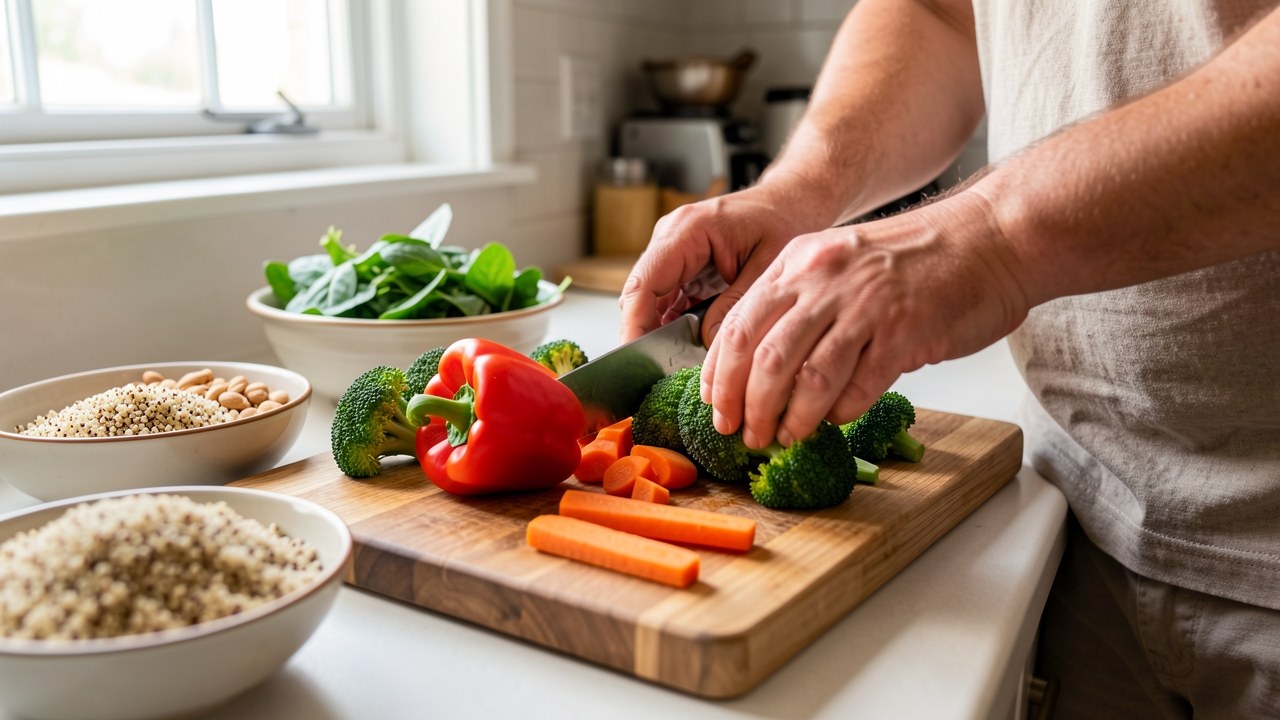
Protein and fiber help you feel full and satisfied, which makes it easier to stick to a calorie deficit without constant hunger. High-volume foods—those that are low in calories but high in water and fiber—can fill your plate and your stomach. Examples include leafy greens, cruciferous vegetables, berries, and lean proteins like chicken breast or fish.
Whole grains also provide fiber and important nutrients, helping to keep your energy stable. Instead of processed snacks, choose these nutrient-dense options to support your weight-management goals.
- Include a lean protein source at each meal, such as poultry, fish, legumes, or low-fat dairy.
- Fill half your plate with fruits and vegetables for volume and fiber.
- Choose whole grains like oats, quinoa, or brown rice over refined grains.
- Add legumes and beans to soups and salads for extra protein and fiber.
Sources: Harvard Health Publishing
Use Portion Control Techniques
You don't need to count every calorie, but you do need to manage portion sizes. Standard serving sizes can be helpful guides, but you can also use visual cues. For example, a serving of meat is roughly the size of a deck of cards, and a serving of pasta is about the size of a hockey puck.
Eating slowly and paying attention to hunger and satiety cues can help prevent overeating. Put your fork down between bites, and check in with your hunger level. Research suggests that being aware of your calorie needs and choosing foods accordingly is more sustainable than strict calorie counting.
- Measure foods like rice, pasta, and cooking oils until you can eyeball portions accurately.
- Use smaller plates to help control portion sizes.
- When eating out, ask for a half portion or box up half your meal before you start.
- Avoid eating from large packages; portion out snacks into a bowl or baggie.
Sources: Harvard Health Publishing
Reduce High-Calorie Beverages
Liquid calories can add up quickly without making you feel full. Sugar-sweetened beverages, including sodas, sweetened teas, and fruit drinks, are a common source of extra calories. Cutting these out is an effective way to reduce total intake.
Make water, coffee, and tea your primary beverages. These have few or no calories and can help you stay hydrated. If you crave flavor, try adding a slice of lemon or cucumber to your water. Unsweetened sparkling water is another good option.
- Replace sugary sodas and juices with water or unsweetened drinks.
- Limit alcohol, as it provides calories and can weaken resolve.
- Choose coffee or tea without added sugar or cream.
- Drink a glass of water before meals to help with fullness.
Sources: Harvard Health Publishing
Incorporate Regular Physical Activity
Physical activity helps create a calorie deficit by increasing your energy expenditure. Aim for at least 150 minutes per week of moderate-intensity aerobic exercise, such as brisk walking, cycling, or swimming. This can be broken into manageable sessions, like 30 minutes on most days.
Strength training is also important. Doing resistance exercises at least two days per week helps preserve muscle mass during weight loss, which keeps your metabolism higher and supports long-term success.
- Start with moderate activities like walking or dancing if you're new to exercise.
- Gradually increase the duration or intensity as you become more comfortable.
- Add resistance training with weights, resistance bands, or bodyweight exercises.
- Find activities you enjoy so you're more likely to stick with them.
Sources: Harvard Health Publishing
Manage Cravings and Eating Out
You don't have to avoid all treats or dining out. The key is to plan ahead and make mindful choices. When eating out, you can often reduce portion sizes by sharing an entrée or taking half of it home before you start eating.
To manage cravings, keep healthy snacks on hand and don't let yourself get overly hungry, which can lead to overeating. Include occasional 'treat' meals so you don't feel deprived, but be mindful of portion sizes. Paying attention to your body's full signals is important, especially when eating out.
- Ask for dressings and sauces on the side so you can control the amount.
- Choose appetizers or sides that are vegetable-based instead of fried options.
- Plan regular, balanced meals to avoid impulsive eating.
- When you crave something sweet, opt for a small portion of dark chocolate or a piece of fruit.
Sources: Harvard Health Publishing
Frequently asked questions
Can I lose weight without counting calories?
Yes, you can. Many people succeed by focusing on dietary quality and portion awareness. Prioritize unprocessed foods like lean proteins, whole grains, fruits, and vegetables, and limit processed, high-calorie items. Use a regular eating schedule and learn to listen to your body's hunger and fullness cues. A moderate calorie deficit, enough for weight loss, occurs naturally when these habits are followed consistently.
Sources: Harvard Health PublishingWhat are the best high-volume foods?
High-volume foods are those that fill you up without a lot of calories. Examples include leafy greens like spinach and lettuce, cruciferous vegetables such as broccoli and cauliflower, and fruits like berries and melons. Soups with broth, and foods with high water content, also add volume. These foods provide fiber and important nutrients while helping manage hunger.
Sources: Harvard Health PublishingHow can I avoid overeating at restaurants?
You can control portions by asking for a half portion or boxing up part of your meal before you start eating. Choose vegetable-based sides or appetizers instead of fried items. Ask for dressings and sauces on the side. Being mindful and eating slowly helps you notice when you're full.
Sources: Harvard Health PublishingIs it okay to have cheat meals?
Having an occasional high-calorie or 'cheat' meal is acceptable as long as it's within your overall calorie goal. The key is moderation and not letting one meal turn into multiple days of overeating. Focus on sustaining a healthy pattern overall, and be mindful of portion sizes during those meals. Some people find it helpful to plan these meals in advance to stay accountable.
Sources: Harvard Health PublishingHow much exercise do I need for a deficit?
For weight loss and overall health, aim for at least 150 minutes per week of moderate-intensity aerobic exercise, such as brisk walking or cycling. Also include strength training at least two days per week to preserve muscle. Starting with this level of activity, combined with dietary changes, supports a sustainable calorie deficit.
Sources: Harvard Health PublishingSources
- Calorie deficit explained: Is it a safe, sustainable approach to weight loss? — Harvard Health Publishing
- Calorie counting made easy — Harvard Health Publishing
- Stop counting calories — Harvard Health Publishing
- Building a plan for healthy eating — Harvard Health Publishing
- Don't count calories, but be aware of them — Harvard Health Publishing
- Creating balanced, healthy meals from low-calorie, nutrient-dense foods — Harvard Health Publishing