The Role of Food Quality in a Calorie Deficit
A calorie deficit occurs when you consume fewer calories than your body needs to maintain its current weight. In this state, the body uses stored fat for energy, which can lead to weight loss. But not all calories are created equal when it comes to staying satisfied and nourished.
Eating nutrient-dense whole foods such as lean proteins, fruits, vegetables, whole grains, and healthy fats helps achieve a healthy calorie deficit. These foods provide essential vitamins, minerals, and fiber, which support overall health while you manage your weight.
- Food quality influences how satisfied you feel after meals.
- Nutrient-dense foods deliver more vitamins and minerals per calorie.
- A moderate calorie deficit is often recommended over an extreme one.
Sources: Solutions Weight Loss, Melamed Weight & Wellness, WebMD
Nutrient-Dense, High-Satiety Foods to Include
Foods that are both nutrient-dense and high in satiety can help you stick to your calorie goals without constant hunger. These foods typically contain a good balance of protein, fiber, and water, which all contribute to fullness.
Choose lean proteins like chicken breast, turkey, fish, eggs, and legumes. Whole grains such as oats, quinoa, and brown rice provide lasting energy and fiber. Non-starchy vegetables like leafy greens, broccoli, and bell peppers are low in calories but high in volume.
Including a variety of these foods helps ensure you get the nutrients you need while managing your appetite.
- Lean proteins: skinless poultry, fish, eggs, tofu, legumes
- Whole grains: oats, brown rice, quinoa, whole-wheat bread
- Vegetables: leafy greens, broccoli, peppers, cauliflower
- Fruits: berries, apples, oranges (whole fruits, not juices)
Sources: Solutions Weight Loss, Melamed Weight & Wellness, WebMD, ProMeals
How Protein Supports Weight Management
Protein is known for its ability to promote feelings of fullness. Including protein with every meal can help you feel satisfied and reduce the urge to snack between meals. This is particularly helpful when you are aiming for a calorie deficit.
Sources of protein, such as eggs, Greek yogurt, lean meats, and beans, are also rich in other nutrients. Adding a serving of protein to each meal can make it easier to stay within your calorie target.
- Including protein with every meal supports satiety.
- Examples of high-protein foods: eggs, Greek yogurt, chicken, tofu, lentils.
Fruits and Vegetables: Volume Eating Explained
Fruits and vegetables are high in water and fiber, making them low in energy density. That means you can eat a larger volume of food for fewer calories, which can help you feel full on a calorie-deficit diet.
For example, a large salad with mixed greens and vegetables can be very filling for relatively few calories. Similarly, snacking on fresh fruit like apples or berries provides sweetness and fiber without excessive calories.
This approach, often called 'volume eating,' allows you to enjoy satisfying portions while staying within your calorie goals.
- High water content and low energy density help fill you up.
- Examples: leafy greens, broccoli, cucumbers, berries, apples.
- Whole fruits are better choices than fruit juices, which lack fiber.
Sources: The Bodybuilding Dietitians, Melamed Weight & Wellness
Healthy Fats: Calorie-Dense but Essential
Fats are necessary for nutrient absorption, hormone production, and cell function. However, they are calorie-dense: each gram provides more calories than protein or carbohydrates. That doesn't mean you should avoid them; it means you should choose them wisely and watch portions.
In a calorie deficit, you can include sources of healthy fats like avocados, nuts, seeds, olive oil, and fatty fish. These provide essential fatty acids and help increase meal satisfaction, but their portions should be measured carefully.
A small handful of nuts or a spoonful of oil can add flavor and nutrition without derailing your deficit.
- Choose unsaturated fats from plant sources and fish.
- Watch portion sizes because fats are calorie-dense.
- Examples: avocado, nuts, seeds, olive oil, salmon.
Sources: Solutions Weight Loss, Melamed Weight & Wellness, WebMD
Sample Meal Ideas That Fit a Deficit
To show how these principles apply, here are some meal ideas that combine protein, fiber, and healthy fats to support satiety and nutrition. These are examples, not full recipes with quantities, but they illustrate balanced options.
For breakfast, you might have plain Greek yogurt with berries and a sprinkle of nuts, or an omelet with vegetables and a small amount of low-fat cheese. These options provide protein and fiber to start your day.
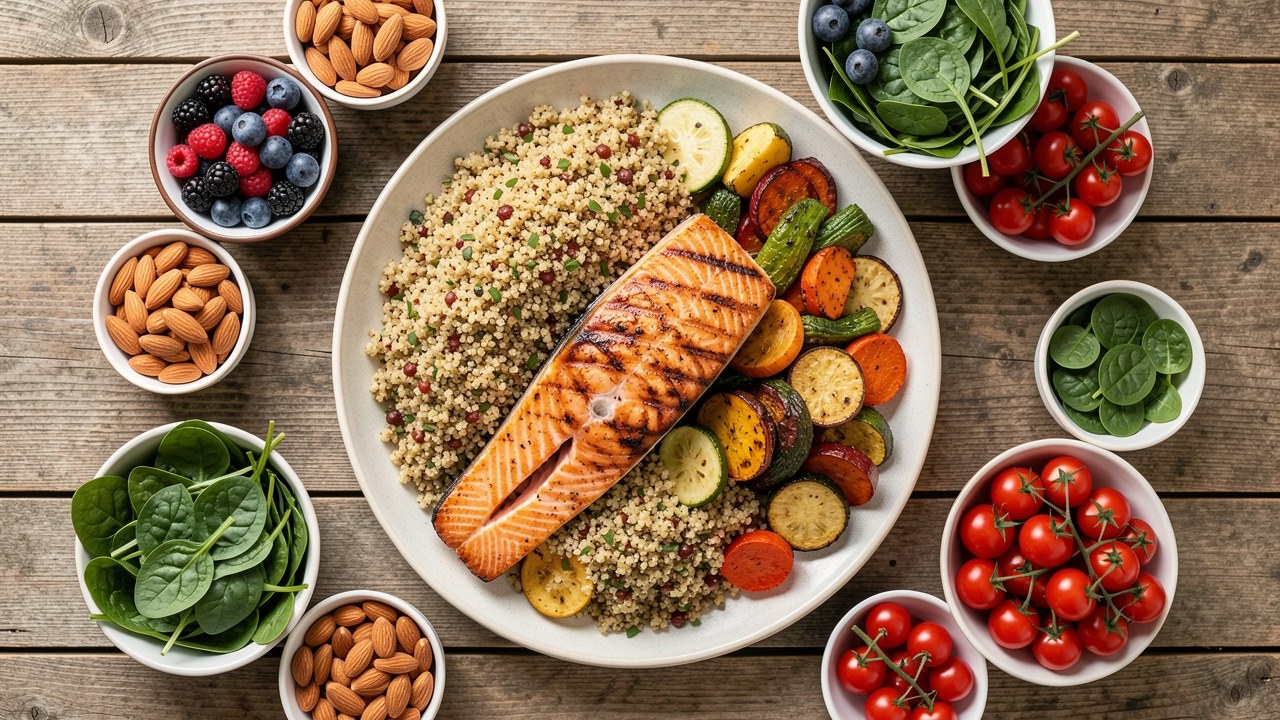
A lunch idea is a salad with mixed greens, grilled chicken, chickpeas, and a light vinaigrette. For dinner, consider baked salmon with roasted vegetables and quinoa.
Snacks can include apple slices with peanut butter, carrot sticks with hummus, or a handful of almonds.
- Breakfast: Greek yogurt with berries and nuts or veggie omelet with low-fat cheese.
- Lunch: Mixed greens with grilled chicken, chickpeas, and vinaigrette.
- Dinner: Baked salmon, roasted vegetables, and quinoa.
- Snacks: Apple with peanut butter, carrots with hummus, or almonds.
Sources: WebMD
Frequently asked questions
What are the best foods to eat when in a calorie deficit?
The best foods are those that are nutrient-dense and promote fullness. This includes lean proteins like chicken, fish, and tofu; high-fiber vegetables and fruits; whole grains like oats and quinoa; and healthy fats from avocados and nuts. These foods help you meet your nutritional needs while keeping you satisfied with fewer calories.
Sources: Solutions Weight Loss, Melamed Weight & WellnessShould I avoid all high-calorie foods?
Not necessarily. In a calorie deficit, you still need essential nutrients, and some high-calorie foods like nuts, seeds, and healthy oils provide beneficial fats. The key is to manage portions and incorporate them in moderation. Very restrictive diets that eliminate entire food groups are often hard to maintain and may miss essential nutrients.
Sources: WebMDDo specific foods boost metabolism to help burn calories?
Some foods have a small thermic effect, meaning your body uses a few calories to digest them, but the overall impact on metabolism is not significant enough to rely on for weight loss. The main way to create a calorie deficit is to consume fewer calories than your body uses, and food choices that promote fullness can help you do that consistently.
Sources: WebMDHow can I manage hunger on a low-calorie diet?
To manage hunger, focus on foods high in protein and fiber, as these increase fullness. Also, choose foods with high water content, like fruits and vegetables, which allow you to eat larger volumes for fewer calories. Spreading protein throughout the day and staying hydrated can help curb cravings.
Sources: Solutions Weight Loss, WebMD, The Bodybuilding DietitiansSources
- What is a Calorie Deficit? - Solutions Weight Loss — Solutions Weight Loss
- Best Foods to Keep You Full in a Calorie Deficit — The Bodybuilding Dietitians — The Bodybuilding Dietitians
- What Is a Calorie Deficit and How Does It Work? - WebMD — WebMD
- What Are The Best Foods for a Calorie Deficit Diet? - Melamed Weight & Wellness — Melamed Weight & Wellness
- Eating to Lose: The Do's and Don'ts of Calorie Deficit — ProMeals