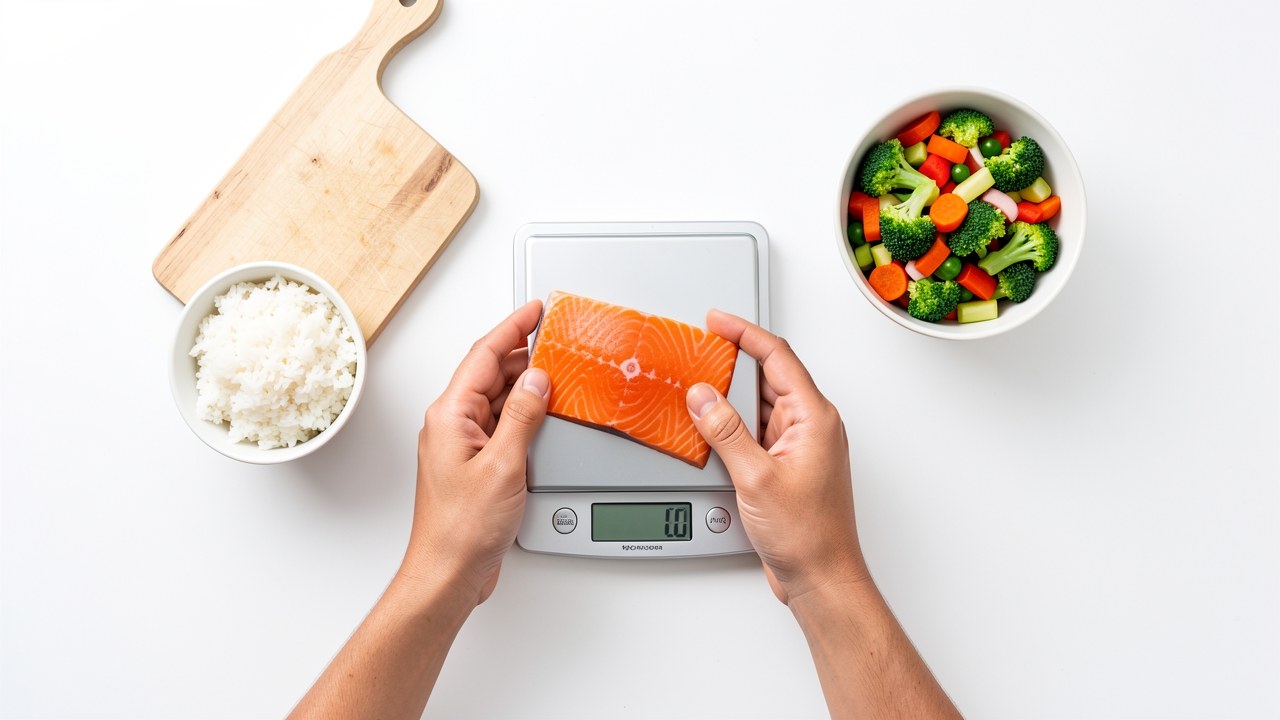
Why Macros Matter in a Calorie Deficit
A calorie deficit is necessary for fat loss, but what you eat during that deficit affects how you feel and how much muscle you retain. Macronutrients—protein, carbohydrates, and fat—each provide energy: protein and carbs have 4 calories per gram, while fat has 9 calories per gram. They also have distinct roles in the body.
Protein supports muscle repair and growth and can help with satiety, aiding weight management. Fats help absorb fat-soluble vitamins and are a concentrated energy source. Carbohydrates are converted to glucose, which fuels physical activity. Balancing these three within your calorie budget can make your diet more sustainable and effective.
Sources: Macros Inc, MyFitnessPal
Estimating Protein Needs to Preserve Muscle
To preserve muscle while in a calorie deficit, many coaches recommend a moderate to higher protein intake. A common guideline is around 1.0 to 1.5 grams of protein per pound of body weight per day. For a 150-pound person, that would be 150 to 225 grams of protein daily. This range supports muscle repair and can help with satiety, but individual needs can vary.
When setting your protein target, consider your activity level and training intensity. If you are very active or lifting weights, you may need the higher end of the range. Protein is a satiating macronutrient, so hitting this target can help you stick to your calorie limit without constant hunger.
Sources: Macros Inc
Setting Fat Intake for Health and Hormones
Dietary fat is important for absorbing fat-soluble vitamins and providing concentrated energy. While dieting, fat intake is often set between 15 and 25% of your total calories, with a suggested minimum of 0.25 grams per pound of body weight. For example, a 180-pound person might aim for at least 45 grams of fat daily. This ensures you get essential fatty acids and fat-soluble vitamins.
Though fats are calorie-dense, you don't need to eliminate them. A moderate intake helps you absorb vitamins and provides energy. The exact minimum needed for hormone function varies, and this guide does not address hormone-specific effects. The ranges above are commonly used as practical starting points.
Sources: Macros Inc, MyFitnessPal
Filling Remaining Calories with Carbohydrates
After you set your protein and fat targets, you fill the rest of your calorie allowance with carbohydrates. Carbohydrates are the body's preferred fuel for physical activity and are converted to glucose for energy. The amount you need depends on your calorie deficit and activity level.
To calculate carb grams, subtract the calories from protein and fat from your total daily calories, then divide by 4 (since carbs have 4 calories per gram). For example, if you have 2000 calories to work with, set protein at 150 grams (600 calories) and fat at 70 grams (630 calories). This leaves 770 calories for carbs, which is about 192 grams. Carbs can come from whole grains, fruits, vegetables, and legumes.
Sources: Macros Inc, MyFitnessPal
Sample Macro Calculations
Let's walk through an example. Suppose you weigh 170 pounds and aim for a 2000-calorie daily intake. Using a moderate protein guideline of 1.2 grams per pound, you'd target 204 grams of protein (816 calories). For fat, using 0.3 grams per pound gives 51 grams (459 calories). That leaves 2000 - 816 - 459 = 725 calories for carbs, which is about 181 grams. Your macro targets would be 204g protein, 51g fat, and 181g carbs.
These numbers are starting points. You can adjust based on your preferences and how you feel. For example, if you find you're not hungry, you might reduce fat slightly and increase carbs. If you're training hard, you might need more carbs and slightly less fat. The key is to stay within your calorie budget while hitting protein and fat minimums.
Sources: Macros Inc
Adjusting Macros as You Lose Weight
Your calorie needs change as you lose weight. A calorie deficit that was sustainable at a higher body weight may become too aggressive as your weight drops, increasing hunger and the risk of muscle loss. It's wise to monitor your weekly average weight and adjust your calorie intake by 100 to 200 calories based on your rate of loss.
When you adjust calories, recalculate your macro targets to keep protein and fat within the recommended ranges. For protein, recalculate based on your new body weight. For fat, adjust as a percentage of your new calorie intake or maintain the per-pound minimum. Carbs fill the remainder. This iterative process helps you continue losing fat while preserving muscle and energy.
Sources: Built With Science
Frequently asked questions
What is the best macro ratio for fat loss?
There is no single best macro ratio, but a common approach is to set protein at about 1.0 to 1.5 grams per pound of body weight, fat at 15-25% of total calories (or a minimum of 0.25 grams per pound), and fill the rest with carbohydrates. This distribution supports muscle preservation and satiety while allowing flexibility.
Sources: Macros IncHow much protein do I need daily in a deficit?
Many sources recommend 1.0 to 1.5 grams of protein per pound of body weight per day while in a calorie deficit. For most people, aiming for that range helps preserve muscle and control hunger. Individual needs may vary based on activity level and training intensity.
Sources: Macros IncCan I eat any food as long as I hit my macros?
While you can technically eat any food within your macro targets, focusing on nutrient-dense sources helps you get vitamins, minerals, and fiber. Protein from lean meats, dairy, and legumes; fats from nuts, seeds, and oils; and carbs from whole grains, fruits, and vegetables are generally more satisfying and support overall health.
Sources: MyFitnessPalDo macros affect how quickly you lose fat?
The rate of fat loss is primarily determined by your calorie deficit, not the specific macro split. However, hitting protein targets can help preserve muscle, and higher protein and fiber intake can increase satiety, making it easier to maintain the deficit over time. Macros also influence how you feel during the process.
Sources: Built With Science, MyFitnessPalSources
- A Guide to Calculating Macros - Macros Inc — Macros Inc
- How To Calculate Macros: Free Macro Calculator — MyFitnessPal
- How to Calculate Your Calorie Deficit (And Actually Stick to It) — Built With Science