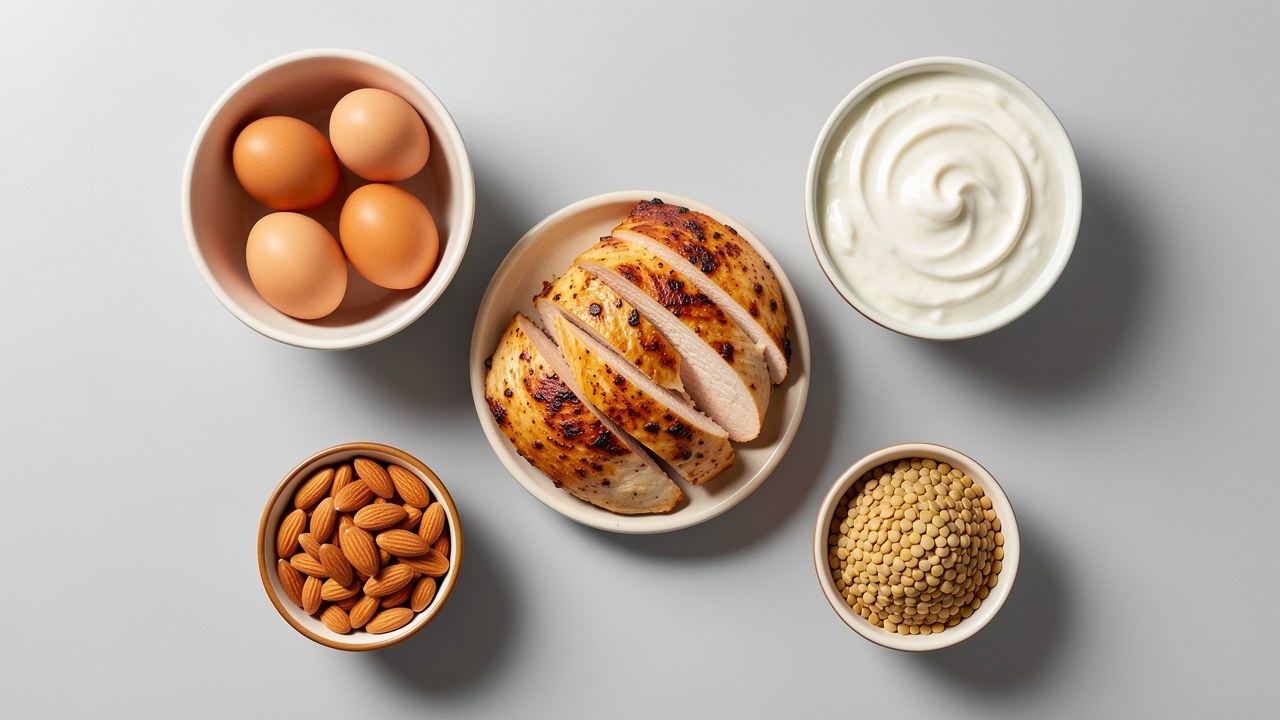
Why Protein Matters in a Calorie Deficit
When you eat fewer calories than your body uses, you lose fat—but you can also lose muscle. Protein plays several key roles during this period: it provides the building blocks your body needs to repair and maintain muscle tissue, it increases satiety, and it has a higher thermic effect than carbohydrates or fats.
Protein has a thermic effect of approximately 20-30%, meaning that a fifth to a third of the calories from protein are used just to digest and metabolize it. This is higher than for carbs or fats, giving protein a slight metabolic advantage when you're in a deficit. Combined with its ability to keep you full, adequate protein intake supports both body composition and adherence to your calorie goals.
- Preserves lean muscle mass
- Increases satiety and reduces hunger
- Has a higher thermic effect compared to other macronutrients
- Supports metabolic rate during weight loss
Sources: Bolt Pharmacy, RNfinity
How Protein Preserves Muscle Mass
During a calorie deficit, your body may break down muscle protein for energy. Eating enough protein helps offset this loss. For general health, the US Recommended Dietary Allowance (RDA) is 0.8 g/kg per day, while the UK Reference Nutrient Intake (RNI) is 0.75 g/kg per day. These are baselines to prevent deficiency, not to optimize body composition during weight loss. When you're actively trying to lose fat, you need more.
For individuals who are resistance training or in a larger calorie deficit, a higher protein intake—closer to the upper end of the recommended range—is beneficial. This is because the mechanical stress of training, combined with adequate protein, signals your body to preserve and even build muscle, even while overall energy intake is reduced.
- Adequate protein provides amino acids for muscle repair and growth.
- Higher protein intake supports muscle retention during weight loss.
- Resistance training and higher protein work together to preserve lean mass.
Sources: Bolt Pharmacy, Ro, Lift Strong
Protein Needs: Evidence-Based Recommendations
The evidence points to a protein intake of 1.2 to 2.2 grams per kilogram of body weight per day during a calorie deficit to preserve lean muscle mass. This range accounts for individual differences in activity level, size of the deficit, and training status.
If you are resistance training or in a more aggressive calorie deficit, aim for the higher end of that range. For example, if you weigh 70 kg (154 lbs), this means about 84 to 154 grams of protein per day. For a 90 kg (198 lbs) person, the range is 108 to 198 grams. The table below summarizes these ranges for common body weights.
- 1.2 to 2.2 g/kg of body weight per day is the recommended range.
- Closer to 2.2 g/kg is suggested for those who lift weights or maintain a large deficit.
- Individual needs vary based on age, body composition, and other factors.
| Body Weight | Protein Range (g/day) |
|---|---|
| 60 kg (132 lbs) | 72–132 |
| 70 kg (154 lbs) | 84–154 |
| 80 kg (176 lbs) | 96–176 |
| 90 kg (198 lbs) | 108–198 |
Sources: Bolt Pharmacy, Alibaba Wellness
How to Distribute Protein Throughout the Day
How you spread your protein intake matters. Consuming protein evenly across meals stimulates muscle protein synthesis more effectively than eating most of your protein in one or two large meals. A common recommendation is to target 20–40 grams of protein per meal, spread over 4 to 5 meals or eating occasions.
This approach ensures a steady supply of amino acids to your muscles throughout the day, which is important during a calorie deficit. It also helps with satiety, as each meal that includes protein will keep you feeling full longer. If you eat three main meals plus one or two snacks, you can easily hit the 20–40 gram target at each.
- Aim for 20–40 g of protein per meal.
- Spread protein across 4–5 meals or snacks.
- Even distribution maximizes muscle protein synthesis compared to lumping protein into few meals.
Sources: Lift Strong, FitCommit, RNfinity, Bolt Pharmacy
Protein Sources and Quality
The quality of protein depends on its amino acid profile and digestibility. Complete proteins contain all nine essential amino acids in sufficient amounts. These are typically animal sources like meat, fish, eggs, dairy, and whey protein. Prioritizing these sources ensures you get a full complement of amino acids to support muscle maintenance.
Plant-based proteins can also meet your needs, but you may need to consume more total protein—about 10–15% more—because they tend to be lower in certain essential amino acids and less digestible. Combining different plant proteins, like beans and rice, can help you get all essential amino acids. Even if you're not plant-based, including a variety of sources can help you meet your protein target easily.
- Complete proteins: meat, fish, eggs, dairy, whey.
- Plant-based proteins: tofu, tempeh, legumes, seitan.
- Plant-based eaters may need 10–15% more protein to compensate for digestibility.
- Variety helps ensure all essential amino acids are consumed.
Sources: Lift Strong, RNfinity
Practical Meal Examples and Protein Timing
Here are a few meal ideas to help you reach your protein target in a calorie deficit. These are not full recipe instructions but simple combinations that offer a significant amount of protein per serving. Remember to adjust portions to fit your calorie and protein goals.
Timing protein around your workouts can also be beneficial. Consuming a meal with 20–40 grams of protein after resistance exercise helps kickstart muscle repair. However, the most critical factor is hitting your total daily protein target consistently, day after day.
The table below provides sample meal ideas with approximate protein content per serving. These are estimates based on typical portion sizes; check food labels or nutrition databases for exact values.
- A meal with 20–40 g of protein after resistance training supports muscle repair.
- Daily total protein is more important than precise timing for most people.
- Use portion sizes that align with your calorie deficit.
| Meal Idea | Approximate Protein per Serving |
|---|---|
| Greek yogurt with berries and a scoop of nuts | 15–25 g |
| Grilled chicken breast with quinoa and broccoli | 35–45 g |
| Scrambled eggs with spinach and feta cheese | 20–25 g |
| Cottage cheese with sliced peaches | 20–25 g |
| Tofu stir-fry with mixed vegetables | 20–30 g |
Sources: Ro
Frequently asked questions
What is the ideal protein intake for fat loss?
For fat loss, evidence suggests consuming 1.2 to 2.2 grams of protein per kilogram of body weight per day. This range helps preserve lean muscle mass while losing fat. Individuals who are more active or in a larger calorie deficit should aim for the higher end, around 2.2 g/kg. For example, a 70 kg person would target 84 to 154 grams per day.
Sources: Bolt Pharmacy, Alibaba WellnessCan you eat too much protein in a deficit?
Eating protein within the recommended range is safe for most healthy individuals. While there is a theoretical upper limit, the 1.2–2.2 g/kg range is well within safe bounds for most people. Very high intakes, such as 3+ g/kg, have not shown additional muscle-sparing benefits and may displace other important nutrients. If you have kidney disease or other medical conditions, consult your healthcare provider before significantly increasing protein intake.
Sources: Bolt PharmacyDo you need to eat protein at every meal?
It's beneficial to eat protein at most meals and snacks. Distributing 20–40 grams of protein across 4–5 eating occasions throughout the day supports muscle protein synthesis better than eating a large amount at one meal. This approach also stabilizes hunger and energy levels, making it easier to stick to your calorie deficit.
Sources: Lift Strong, FitCommit, RNfinity, Bolt PharmacyWhat happens if you don't eat enough protein while cutting?
If you don't eat enough protein during a calorie deficit, you increase the risk of losing lean muscle mass along with fat. This can slow your metabolism and make it harder to maintain weight loss in the long run. You may also feel hungrier because protein's satiety effects are missing. Following the recommended intake helps prevent these issues.
Sources: Bolt Pharmacy, RNfinityCan protein powder help meet your goals in a deficit?
Yes, protein powder can be a convenient way to increase your protein intake without adding many excess calories. It can be especially useful for reaching your daily target, particularly if you have higher protein needs or a busy schedule. Choose a quality source like whey or a plant-based complete protein, and include whole foods as your primary sources.
Sources: Lift Strong, RNfinitySources
- Daily Protein Calculator — Lift Strong
- Protein Intake Calculator: How Much Protein Per Day | FitCommit | FitCommit — FitCommit
- Protein Calculator | RNfinity — RNfinity
- Protein for Calorie Deficit: How Much You Need for Fat Loss – Bolt Pharmacy — Bolt Pharmacy
- How Much Protein Should I Eat on a 1200 Calorie Deficit? — Alibaba Wellness
- Protein Calculator for Weight Loss and Muscle Gain — Ro